I woke up this morning thinking about Bowie. There'd been a boozy discussion about 'genius': which musicians the word might apply to. It's a conversation as potentially incendiary as a pub trawl over the values of 'Art'. You don't need to like something to appreciate its value. Prince anyone? Genius, but I don't reach for his albums often. Dylan? Indubitably. I play Bruce more. Miles? Yes. Joni? Yes. Macca? Lennon? Nope. I love them both, but their 'genius' was collective: with the Fab Four. Paddy? Possibly. Neil Hannon? Possibly. I don't reckon Paul Buchanan a genius but his music means more to me than Prince's and almost any other artist's.
I rate this particular song, on record, as one of the great modern productions: one of the great vocals. Apparently when Bowie recorded the version on Hunky Dory, he nailed it in one take and fell in a wrecked, wracked, weeping mess at its conclusion: genius made man at the recognition of his gift. That literary giant/midget Rimbaud said “Genius is the recovery of childhood at will” and perhaps that was Bowie's gift: that he could wilfully tap into past wonders: the mysteries and mischief of formative life. Ironic then that the song is apparently about a teenage girl's desire to escape her restrictive childhood. Also paradoxical that this otherworldly man, so often likened to an alien, could speak with a common tongue.
So: Bowie? Yes: without a shadow of a doubt. He dressed his genius up in the clothes of imaginary friends and yet... he still made the song his own. And here he is, stripping it down to its undies. Even the Liberace piano stylings cannot undermine the power of this brilliant performance. What a genius! What an Artist! What a man!
Just separate chairs in separate rooms Jesus, please Make us happy sometimes No more shout No more fight Family life
It's interesting how arrested many of us are by the Blue Nile song 'Family Life'. I have always thought that it was something to do with the way that singer Paul Buchanan tremulously presents us with shards of personal memory that resonate as universal recognition. Everyone's family life is different, but we all hold moments of collective clan memory that equate to personal pain. That tussle to retain and release what pleases or injures is a mournful shuffle towards something... less. Even if it is a memory full of emptiness - that clumsy dance with the 'everyday' - the cruelties stay with us as a part of our personal history. Of course there's beauty too, but that is often ephemeral, idealised in retrospect. Scars are held as badges of family honour, a kinship of ritual that ties and binds. It's a strange loyalty that we have to the overwhelming burden of a past imperfect. Our fragility and strength are often bequeathed to us by a patriarchal parent: we remain tethered to, and haunted by the sound of their voices. Our past becomes us, as our past becomes us...
Sorry to rattle on but... last night I watched 'Distant Voices, Still Lives', Terence Davies' impressionistic take on a working-class family's life in 1940s and 1950s Liverpool. It is based on Davies's family and is chillingly familiar. Everyone is hopeful for 'happier', but are happy with their lot. The tableau is masterfully held together by music: old familiar tunes, offered as mantras to soundtrack the misery and mirth. I reckon that Paul Buchanan might have watched it before penning his masterpiece. Give it a go: you'll know exactly what I mean.
Bruce Springsteen has finally made an ad: a film in fact: 'The Middle', to help celebrate Jeep's 80th year. And he's getting pelters for it:
"Christian Nationalism! There's no middle with someone who wears a ‘Camp Auschwitz’ shirt or who walks a Confederate flag through the US Capitol. There's no middle with insurrectionists. There's no middle with fascists. There's no middle with anyone who harasses a school shooting survivor.”
“I believe what the Jeep ad was telling us is that if we just set aside our differences with the fascists who want us silenced or dead, Bruce Springsteen will bring us each a Jeep we can use when we eventually have to flee to Canada.”
Bruce himself dedicates the film “To the ReUnited States of America.” and says “It’s no secret … The middle has been a hard place to get to lately. Between red and blue. Between servant and citizen. Between our freedom and our fear. Now, fear has never been the best of who we are. And as for freedom, it’s not the property of just the fortunate few; it belongs to us all.”
Regardless of any fee taken or paid - he is a working man after all - the message seems like a fairly simplistic attempt to unify to me. I’m guessing that Bruce sees it as his job. His blue collar popularism has always appealed across the board. ‘Jeep’ is a nuts and bolts brand aimed at the working man. As is religion. He’s gone to the heart of the country. He’s put on a stetson and gone for the buckle of the Bible Belt.
Bases loaded and covered then. But, this seems more of a bunt than a home run. Perhaps Bruce is taking stock before a reset and a big swing? Despite his recent public alignment with Democratic politics, Bruce has always stood solid on common ground. Trouble is, the sands have shifted so much recently that Americans are either unsure of their footing or more entrenched than ever. Now, more than ever, the promised land seems more of an American pipe dream than a reality. It’ll be interesting to see how Bruce pitches his next delivery. I don’t anticipate a curve ball but I reckon there’ll be some bile in a heavy delivery. A spit ball then.
What Bruce is trying to endorse with the film is unclear. That’s if his hands were on the wheel. Other than a vague intent to unite, the mystic message is middling, muddled. But is taking a stand for common ground really legitimatising extremism? And wtf is ‘Emotional Terrorism’? At worst Bruce’s message is naive: at least it is well intentioned. Ultimately I hear a simple message: a plea for unity, forgiveness, perhaps even contrition.
The other main criticism seems to be that finally Bruce seems available for sale or rent. It’s not really Bruce trying to sell a car, more a brand trying to ally itself to his. It doesn’t make me want to buy a Jeep. Or a bible.
Take a look. Do you see Christian Nationalism in the homilies? Do you hear resignation and acceptance of extremism in the call to "meet in the middle"? I just hear a tired, elderly man, keen on unity. Oh, and that sponsor's fee. At least Bruce didn’t give Jeep a song: a hymn: a slogan. Apt that the music he offered was ethereal; impressionistic: there’s nothing more undeniably American, or beautifully vague, than a gently weeping peddle steel guitar.
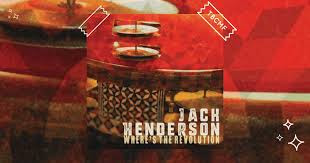
'Where's the Revolution'. Where's the question mark? Perhaps it's missing because, as ever, there are more questions than answers.
"Doesn't matter what you lose… it only matters what you choose"
'Conviction' is the word that comes to mind when I consider Jack. A few years back Di and I were invited to a New Year's Eve party at the now defunct Convent in Stroud. Enthusiastically run by maverick eccentric Matt Roberts, within minutes of arrival we were promoted from guests to Stage Manager (me) and Number 1 Cameraman (Di). It was quite a night: particularly considering Matt's generous gift of a free bar. During the soundcheck my ear was taken by a fashionably disheveled gent crouched over the piano, wrenching a beautifully baleful ballad from the ivories. There was a whiff of Tom Waits in the grainy delivery. The injury was clear, the conviction compelling. Later at the bar I was introduced to the performer as Jack Henderson. It turned out that Jack and I had something in common: he and my musical partner Marcus Cliffe had previously worked together on a project or two.
Jack and I stayed in touch and, last year, I was offered a chance to hear new songs as work in progress. The sketches were incomplete but fascinating. I offered vague encouragement and moved on. And then early this year a package dropped on my doorstep: Jack in a box! His newly completed album 'Where's the Revolution' sat atop my 'to listen to' pile and... somehow got buried.
In the meantime I'd read about Jack's need to make this a homespun album.It was clear that here was a man in command of his craft, but one who was guided as much by budget as by instinct.
“If necessity is the mother of invention then 'Where’s The Revolution' is largely the result of that confluence of necessity and invention. Sometimes limitations can be liberating and for this album I wanted to explore what would happen if I recorded, produced and more or less played everything myself whilst embracing those limitations, both physical and financial, head-on. There was no overarching manifesto and I wanted to let the songs dictate their own course and allow the imposed imperfections to constitute the very soul of the record.”
Months later, this morning I dug out the album and finally got around to breaking the seal. First impressions are that the soundscape has been vastly improved from what I'd previously heard. The production has pushed Jack's voice to the fore, but there is a musical muscularity that belies the domestic source and more than matches the muse. The arrangements are traditional songwriter fare: piano and electric guitar the primary colors. A wobbly mellotron wanders into the room occasionally to reinforce a woozy sensibility. Comparisons can be odious so let's get them out of the way early. I can hear 70s Bowie floating in the high register; Joseph Arthur lurks in the mid shadows; whilst Waits and Dylan haunt the bottom end. And yet Jack's timbre has a unique, genuinely engaging quality in its quivering delivery. As he earnestly totes the mundanities, again, 'conviction' is the byword here. You believe that Jack believes everything he's singing about.And whilst he's got nothing particularly revolutionary to say, he says it with such conviction that you can't help but buy into these passionate paeans of disillusion. I've got 'imaginatively familiar in his melancholy' scribbled down here. Jack says it so much better:
“We’re often acutely aware of our own failings. We all have the capacity for occasional acts of selfishness, anger or jealousy, but those need not be what define us. We are all capable of acts of incredible kindness and self-sacrifice too. Perhaps we begin caring for each other by forgiving and being kind to ourselves first and recognising our shared human condition. We are so much better than we think we are and if we devote our energies to building the world we want to live in and pass on to generations that follow us we become the hope that truly remains.”
Ever hopeful then, but you can tell from the title track that Jack's not a happy bunny: “I'm sick of these clockwork clowns and their silly little paper crowns. Reckless disaffection, constant disconnection, squeeze you till you’re almost sick, We don’t have to take this shit, Oh my dear, where’s the revolution now”. Thankfully, we are talking a gentle revolution here. Jack's not breaking windows; it's your heart he's after. There's compassion in abundance. 'Stars' is a beatific hymn to hope. He's too smart to tell us that he's looking up from the gutter, but you kind of get that his boots are well worn and muddy as he gazes at the heavens: a journeyman considering the journey and the journey's end.'We are castaways: so good, so far... We are the conscious light that lingers on: a hope that will remain when we have gone."
'It's only Rain'completes the set contemplatively, reinforcing the compelling image of the slightly crumpled, flesh wounded Everyman.
'Don't be afraid, it's only rain. Nothing we haven't seen before'.
Indeed.
And yet... there's something charming in Henderson's wide-eyed injury, in the way that he catches and caresses the quotidian as 'penny drop' moments.
His is a true heart, a familiar flight, a journey worth sharing.
How could you not want for the company of a man who leaves the room thus:
"Every dying star leaves a trail across the universe. Every weary pilgrim goes on believing, and every broken heart goes on beating."
'Domestic' is clearly rooted in the idea of 'home'. Armfield apparently gave up on work and decided to hibernate. It seems that he'd been over stimulated by worldy affairs and was intent on retreat:
"There's nothing being said that I want to hear. And if anybody wants me I'm not here."
His ambitions had become more wholly humble.
"January first. My new year's resolution is to learn the second verse of Auld Lang Syne'.
I know, I know: comparisons are odious but I'm getting Jake and Jaques with a slight aftertaste of Leonard. Wait, there's a bit of Waits in there too. The ghosts of Thackery, Brel and Cohen are fine spirits to marinate your fledgling chanson in. Perhaps more than anyone, Armfield shares a muse of the mews with Essex folk singer Chris Wood, whose keen eye and dry wit similarly details the familial and the tribal. They occupy common ground as they focus on the solid state of things: the actual world rather than a virtual one. Paul ponders, but his touch is light, coherent, heartfelt and true. His treacley tenor has a calming timbre: perfectly pitched as he sings of the mundanities; toting and detailing the dots that join our everyday. He raises the drawbridge to consider the quotidian and occasionally peers out to squint at the connections outdoors. But how to truly retreat if you are genuinely compassionate and concerned? Paul's looking in to better look out: you can sense the curtains twitching. And in that refined worldview, beyond the sweet ennui, there's a worldly recognition of the bitter divisions that Brexit has elicited; particularly the platform afforded to those with concerns about national identity. Ironic then that Armfield lives on a tiny island anchored to a larger one. From his home on the Isle of Wight he questions the entitlement of belonging. In 'Flagbearers' his kindly gaze drifts from navel fluff to naval flags. 'Washed up on the shore, just a mongrel like yourself... Is that a medal of honour or just a badly drawn drawn bulldog tattoo? He wearily concludes "We are all just strangers." It is perhaps that disheartened sense of dislocation that has ushered him towards the sanctuary and protection of his own threshold. And there there is family. There there is love: "And for the briefest perfect moment I am absolutely yours and you are absolutely mine". Paul considers the empty nest of a newly child free home in 'Fledglings': "The roost is tidier, every room is cleaner, quieter, wider. Less housework yes but much less homely... I still leave the door unlocked." His attention ultimately settles on his life partner, his beloved wife whom he clearly and cleverly eulogises in 'You'. It's a lovesong so artfully, heartfully stuffed with love that you want to hug the both of them: "My heart's a purse that's full to bursting, but the only thing of any worth is a faded crumpled photograph of you."
It is the rarest of things: a work of quiet, considered beauty: one that takes its own sweet time to reveal itself. With an album so lyrically rich it is easy to overlook the musical content. It's jazz, it's folk, it's lovely. Interestingly Paul chose to record these homely homilies abroad in Stuttgart with European musicians. At the core are Giulio Cantore on guitars and cavaquinho, drummer Johann Polzer and producer Max Braun on bass. Their gentle strums and sophisticated proddings provide the perfect patchwork for what could be the perfect 'duvet album'. And yet, although this album fits like a pair of well loved slippers, Paul's mischief keeps a pebble playfully placed, just in case you should get too comfortable.
This is ultimately an album written by a man in love with words. His concept is nuanced with caution and care: if there's a more finessed, lyrically astute album released this year I'll eat my Thesaurus. Profound and scintillatingly droll, Paul Armfield is a master of the bon mot and the vinegary vagary. I could flick the artfully printed lyric cards at you and let you find faith in the familiarities. But I can only quote Paul so much, so will leave you with the last lines of the final song: a summation of Domestic's canny conceit: that, although home is where the heart is, we're all home alone.Armfield's search for a sense of home has no cozy conclusion. He settles for 'a lighter darkness'. 'Alone' recognizes the loves and losses that make this sweet, ordinary life such an extraordinary wonder. And appropriately enough, there, finally, is my leading line: This sweet, ordinary album is an extraordinary wonder.
"Rain flicks the leaves and the wind whips through the trees
And a lighter darkness spills out across the sky
The headlights of the cars lead us back to where we started from
“I’d always thought of the uke as a toy … a little handful of happiness. But not anymore. From the moment I picked it up, I fell in love. A ukulele has a sad, fractured sweetness, like a broken harp. And a modesty. It doesn’t try to impress you, it almost apologizes for being there.”
So spoke Sylvie. 'Fractured sweetness' pretty much sums up the appeal of this delicate offering. It's quite an achievement that an album birthed in hurt is steeped in such serenity. The portents weren't good. Simmons had recorded her 2014 debut 'Sylvie' in Arizona with the grandaddy of Americana, Howe Gelb. She returned to Gelb's favoured Tucson studio WaveLab in 2017 to start work on the follow up. However, whilst out walking in the desert after the first day's recording, a stumble led to serious injury; particularly a badly broken left hand. That hurt not only halted the recordings and challenged Simmons' future uke skills, but actually threatened the loss of a limb. Sylvie retreated to her home in San Fransisco to recover and reconsider. Time told. Wounds eventually healed. With itching scars still smarting, she gamely returned to the source of the hurt. Hurt and recovery are major themes here. 'Blue on Blue' a perfect title then. You get the feeling that Sylvie's world is hurtful, hopeful and homely. That she managed to recreate that feeling so far from home is credit to the company she chose to keep for these recordings.
Producer Howe Gelb famously sees rehearsal as 'the enemy'. He gathered a trusty crew of Tucsonan musicians to come play his ruleless game: familiars who recognized the virtues of spontaneity. Gelb kept things suitably understated throughout: there's plenty of space left for nuance, finesse, and the wonder that is Sylvie's breathy delivery. Her ukulele, that 'broken harp', laconically leads, keyboards whisper, a bass occasionally wanders into the spartan room, guitars gently conspire to caress the silence. There are whistles and bells (yup) but they are playfully placed to unsettle any possibility of ennui. The lack of drums and percussion lend a faltering uncertainty which adds to the woozy, indolent charm. And charm is central to the success of this album. There is vulnerability in Sylvie's gentle voice: a quivering quaver that speaks of hard earned heartache. And what of the songs? Given the preceding trauma, you anticipate bitter darkness: you are gifted sweetness and light.
Her style is classic Laurel Canyon 70s song-smithery, and Sylvie references that influence with a calm, quiet confidence. It is clear that she has spent a lifetime marinating in music. Her journalistic career has required her to consider and critique the successes and failures of others. Gamekeeper turned poacher then? More like poacher turned sitting duck: a courageous step away from the relative comfort of disinterested editorials, towards the faltering uncertainties of a life as troubadour.And Sylvie surely leads with her chin. You feel the kindred influence of Nico in the loose limbed, quotidian appraisals. You sense the presence of Leonard Cohen in the lyrical conceits, in the way that Sylvie catches and caresses the mundanities with her poets' eye: “ladybugs climb up the blade of grass and balance on top of a dewdrop, swaying in the breeze like they were floating on a fish eye.” You hear Neil Young in most every fragile melody. This does not confer Simmons a copyist. How could a life in music not influence her creativity? What's fascinating is that, because she has left it so late in the day to write these songs, she's too worldly to play the ingénue. She presents herself as she is, not as what she wants to become. And yet this awareness is not a cocky strut. It's a gentle, breezy dance: a composed, rear mirror recognition of where her life has beached her. And that Sylvie chooses to keep dancing, with no shoes on, amid the broken glass and dog shit, renders her tender songs as mischievous, elegant courtship. It's that heady mix of knowing and naivety that makes 'Blue on Blue' simply irresistible.
A re-issue of the three, long out of print albums that Chris Thomson's band The Bathers released in the 90s on the German label Marina. Vinyl & CD: Released 23 October, 2020
I have followed Chris Thomson's music from the off. Friends Again's 'Trapped and Unwrapped' (1984) was a fine debut. It mined a similar vein to Roddy Frame's Aztec Camera and that was good enough for me. When they split in 1985 I'd heard that Chris had formed a band as a vehicle for his idiosyncratic stylings. I remember buying the first album 'Unusual Places to Die' in 1987 and was intrigued, although a little unsure of the ramshackle musicality. 1990s 'Sweet Deceit' was a step in the right direction for me, but I was still not overwhelmed. And then the band signed to German label Marina and the stars seemed to align.
"A heightened sense of romanticism was part and parcel of those songs and recordings. At times the lines became blurred, as they tend to do. That exploration of those shadowy regions yields much beauty."
Chris Thomson August 2020
Listening to Chris Thomson’s music can be a little overwhelming. It is an investment for sure, but there’s labour involved. It’s a journey that you are required to surrender to. It has to be a personal engagement: you have to take Chris on. His is a dizzy dance: one moment stately, jittery the next, but one that leaves you breathlessly elated. You are often reduced to mirroring uncertain, fragmented steps. My reactions are abstract, emotional. I try to find meaning in the vague reverie but, as I struggle to focus, I'm moved along apace. It’s a bit like jogging through the rooms of a lofty art gallery whilst wearing your Mum’s glasses: the eye never quite settles. It’s a gentle pace for sure: the music is dark and strangely exotic, otherworldly. It’s all about love of course: a lush, intoxicating romanticism that elicits a giddy reaction, as you voyeuristically view half-revealed moments. Thomson’s muse is cinematic, operatic, impressionistic: you are challenged to decipher the opulent imagery, the fanciful conceits, the half whispered, unfinished sentences. It evokes rather than details, although sometimes the details are telling. But telling what? You are reduced to grasping at fleeting glimpses, sneaking snatched impressions: of the torment of unrequited love, of kisses un-kissed, of the musty musk of yesterday’s sheets; of the veiled promise of a moonlit tryst. There’s lots of movement, often towards gothic destinations, usually on the wings of desire, despair, or an old love song. These are not confessionals though: there's mischief afoot. It is clear that Thomson has created a persona to inhabit the lush, theatrical backdrops that couch his concerns. There is however a sure sense of 'self' in the flesh that he puts on his hero's bones. Lines blur between fact and fiction: Chris is surely investing the script with his own hard earned wisdom. His champion becomes ours: an exemplar of romantic virtue. We are swept along, essentially taken for a ride. That you commit unquestioningly to his journey is a sure sign of a confident craftsmen: so convincingly does he inhabit his imagined world. The man himself admits that "... a heightened sense of romanticism was part and parcel of those songs and recordings. At times the lines became blurred, as they tend to do." We come to see 'the artist' as the man: a further indication that Thomson plays his part well. And so it becomes almost impossible to listen to the songs without accepting them at face value: and that face is Thomson's. And you can't help but root for him
Our protagonist is dissolute; potentially profligate, certainly rakish. Pleasured, pained, frustrated and seldom satiated. Heroic but unenviable, erudite but seemingly unbalanced: found yet flailing; giddy and unsettled by his adventures. You find yourself lost in a hinterland of what's real and imagined. But what wondrous perplexity! When it comes to brow furrowed romantic rumination, even stumbling, Thomson is virtually peerless. And his peers? Tom Waits’ lust is earthier, Leonard Cohen’s more grounded. For me Thomson shares much of Nick Cave’s libertinism. Cave’s desires are more tangible, flesh made real; potential conquests caught confidently in his cross hairs. His challenges are rationalized, his impulses controlled. Thomson seems less confident of his quest, intent on serenity but less sure of the source of desire. And yet that flailing intensifies his adventure: the ardor increases, triggering a desperate pursuit for more of that elusive pleasure… Desire and fulfillment are seldom happy bedfellows. Perhaps that’s the crux of Thomson’s dilemma: the unfulfilled hope, the unrealized ambition. It’s familiar fodder for songwriters. Tom Waits famously told us that “The obsession's in the chasing and not the apprehending. The pursuit, you see, and never the arrest.”
Back footed and reticent, Thomson’s plight is less harmonious, more beguiling, shrouded by uncertainty. I listen hard, desperate to understand but destined to be kept in the dark. I’m reminded of when, as a child, I read by torchlight under sheets. The words seemed weightier, their meaning more intense. That sensory overload added to the giddy appreciation, but didn’t necessarily result in understanding. Whether this is pretension or artful ambition depends upon your mood or your appetite. This intoxicating music renders me drowsy, makes me taste dark, bitter chocolate. That Thomson’s reach exceeds his grasp speaks volumes of his unfettered ambition. His vision remains singular, untethered to the lexicon of rock and roll. Strewth! I hope you’re still with me? Apologies if this seems over-written. Writing about The Bathers is about as challenging as listening to them.
And so, to the albums. ‘The Marina Trilogy’.
The three, long out of print albums that The Bathers released under the patronage of German label Marina during the 1990s. It’s unfathomable that this is their first ever printing on vinyl. This music seems conceived, created and designed for that format. I’m happy to report that the platters are flat, noiseless and beautifully syrupy.
Trying to describe the music is a challenge: one that might be beyond me but I'm keen to give it a go. I think it best to initially consider Thomson's broad intention for his musical escapades. He recently told me "that exploration of those shadowy regions yields much beauty." And it surely does. It's a thrilling adventure, one that I'm happy to join him on.
Dim the lights, fill my glass, I’m going in…
Lagoon Blues (1993)
Interestingly, this album was completed as 'a speculative venture' before Marina became involved. Once they had heard the mixes they were convinced to put their weight behind the album. This is a definite development from the first two Bathers albums. With all of the building blocks now in place, there is a sense of the flexing of muscles: an excitement at the possibilities of this new format. The woozy, languid arrangements are sumptuosly velveteen: the cryptic narratives strangely unsettling; the fragmented montages almost Brechtian in spirit. And yet you are swept along, because it would seem indecent to break the spell. The songs are informed by the sweet and sweaty perfume of passion. The arrangements bewilderingly baroque, loose, almost adlibbed. There’s not a whiff of Caledonia. The songs are awash with European reference: Mahler, Bergman, sultry Italian summers, Grand Hotels, French gowns. Cupid takes aim, misses, takes aim again. And again. Unrequited love abounds. The indulgence is almost indecent. Christ knows what Marina's commercial expectations were. The most radio friendly cut ‘Ave the Leopards’ proclaims: “Ave Little Mamma, meet me at the fountain tonight. Bring your Egyptian pistols and blast them in the cool of the night… Mind me when mischief finds me, from the cruel and the vain.” A call to arms as such, but a call that I’m not sure Radio 1 would’ve returned.
Sunpowder (1995)
Co-produced by Thomson with Keith Mitchell, a newly formed band endorsed the Bathers’ sophisticated formula: a unique blend: let’s call it ‘chamber jazz folk’. The burgeoning relationship with Marina had given the band a fresh confidence. This was a step forward: ever ambitious but musically more assured, likely because the line-up had become more established. Guest vocals from ex Cocteau Twin Liz Frazer added an ethereal foil for Thomson’s tormented, earthier concerns: fixing on ‘love’s power’, the church chords always seem to lead to the boudoir. ‘Tonight we have nothing left to prove… to feel love, to feel alive… and to know that once again we will surrender to love.” The accumulative lushness is akin to taking a mouthful of pear drops and, 5 minutes later washing them down with a healthy dose of Channel No 5. Yet another sensual overload then. ‘DelFt’ is a song so delicately fragile that I daren’t breath until, at the death, Thomson tellingly murmured “If I could just be the one”. The details are delicious. His beloved is faithless, nameless, shameless, unchained. And she holds ‘a little black book on jazz’. One minute stage centre, the next whispering with the chorus downstage, laconic, yet intent, Thomson brings a Prospero like mischief to the proceedings. Love' rough magic: he still cannot quantify its baseless fabric: the object of his love remains lost or just out of reach; the malaise and cure perfectly captured in an unusually direct line from ‘For Saskia’:“I couldn’t keep you for too long, but I can keep you in a song, forever young… forever in a dream.”
Even though adrift, Chris seems closer to ‘home’, the injuries more local, he remains disoriented, loss and loneliness still inform the songs. In ‘Weem Rock Muse’ he’s “... lost in the Scottish mountains. Alone in the Scottish mists”. He’s haunted by the ‘lost brown eyed Scottish girl’ of ‘She’s Gone Forever’. And finally, devastatingly, he’s cast astray in the desolate conclusion of ‘The Dutch Venus’:‘There’s nothing left to trust. Everything is lost.” Champion or chump? Thomson's gallant hero might be a fool for love, forever putting his face to the pie, doomed to repeat the same mistakes, but has the arc of despair ever been rendered quite so beautifully?
Kelvingrove Baby (1997)
The expanded band line up that shaped ‘Sunpowder’ reconvened to make what would be The Bathers’ final record with Marina. The rhythm section was still unresolved: duties shared between bassists Sam Loup, Douglas MacIntyre and Ken McHugh vied with drummers Hazel Morrison and James Locke. Guitarist Colin McIlroy was joined by accordionist, pianist Carlo Scattini, organist Fermina Haze, augmented by the strings of Ian White and Mark Wilson. Love and Money’s James Grant and Del Amitri’s Justin Currie fleshed out the backing vocals.
Our man is still world weary, troubled, but here he seems more focussed on his foibles. We are offered snapshots rather than fleeting images. He catches things square on, rather than from the corner of his eye. It is all the more engaging for that. Our capture and commitment makes for an easier engagement than previously. Thomson's foil appears to have resolved a few of his issues, although he's forever fated to struggle with detailing, let alone defining, love’s mysteries. Less impressionistic: more assured, where love was once unrequited, there was now a girlfriend: something that initially gives the album an almost celebratory feel. “Isn’t she fine? Positively the sweetest of her kind.”
In that moment, you kind of want to throw your hat in the air and give the guy a great big hug. He remains hopeful of retaining that love in what might be his most beloved song, ‘If Love Could Last Forever’. But for me the highpoint of the album is the title track. ‘Kelvingrove Baby’. Unsurprisingly it is unashamedly romantic: “If I could reach you I would walk all night to hold you in the racing dawn”. And then, line of lines, moment of moments, as the song rushes towards its thrilling climax, Thomson asserts: When you girl looks at you Yes when she sighs When she moves beside you You want the moment Touched with magic And immortality You want rain You want soft music And the last words to be about love.
It is a transcendent, celebratory, chicken skin moment that I’d recommend to the hardest heart. The intoxicating vagaries of desire distilled into a single beat. It reminds us why we love music: it takes the mundane and somehow, miraculously renders it holy. The holy held: the unobtainable grasped. It is more than just a ‘connection’, it feels more like a communion. A joyous, hopeful moment to remind us that we are all connected: as much by our defeats as by our victories, and that, however fleeting, that moment needs to be marked. That generosity is positively elevating. The finale of this song alone made me love the album. 'Kelvingrove Baby' feels like the conclusion of the record but only ends side 1. Flipside there’s a more prosaic joy in ‘Dial’.“There’s nothing quite as sweet, kicking off your shoes in the sand”. But then, as the album slips gracefully towards conclusion, you feel a mournful sense of slippage, as though a spell has been broken. The Keatsian conceit is that beauty is transient. Similarly, Thomson is recognising the impermanence of acquisition: reminded that defeat follows victory as surely as night follows day. You begin to wonder whether the ‘girlfriend’ is flesh or fantasy, a figment of a hopeful heart. Our principal is laid bare, vulnerable, earthbound; languorously concluding ‘I was not born to fly’.
The album concludes with ‘Twelve’. Yes I love you Until the orchids Forget to bloom Yes I love you Until the roses Lose their perfume Yes I love you Until the poets Run out of rhyme Yes I love you Until the twelfth of never And, baby, you know that’s Such a long, long time
In lesser hands the sentiment could be sweet, saccharine, valentine card trite. As a sign-off from an artist who is more often lost than found, the effect is heart-swellingly moving. Thomson lays himself open: his dignified croon straining, struggling. It speaks more about the healing powers of love than the injuries of loss. Victories and defeats are our daily bread. Somehow, miraculously, Thomson serves them up as manna from heaven.
‘Kelvingrove Baby’ is certainly The Bathers' most coherent album to date. One that many consider Chris Thomson’s masterpiece. I can but agree. It deserves to be held in the same esteem as The Blue Nile's 'Hats'. I can't think of a higher compliment. I can also confidently attest to the accumulative effect of the music on these three albums. With each release, The Bathers got better.
The Marina Trilogy deserves to sit atop the highest pedestal. Like much worthy art, it often willfully disguises intention, challenging you to find meaning. Perhaps ‘understanding’ is not pivotal here. Why try to demystify? Why sacrifice magic for meaning? Maybe all that’s required is willing. You do have to be up for the challenge. Best not to look too long or think too hard. Best not to attempt to decode the veiled messages: they’re often too lateral to be taken literally. Best to surrender to Thomson’s vulnerable charms and admire his ambitious devotion, then douse yourself in the vagaries of his intent. Best to steep yourself in the kindred sorrows and, dare I say, wallow in the recognitions. Better; to celebrate the brief sojourns and then marinade in the melancholy of their loss. Better still, to simply immerse yourself in Chris Thomson’s brave, bold and beautiful quest for betterment. But please, don’t just dip your toe, this is music to bathe in.
A new album from Blue Rose Code is always something to celebrate. The title 'With Healings of the Deepest Kind' kind of gives the game away. There are fresh wounds, there is healing: gratitude follows. It might be a familiar path but it's trodden with such grace and fortitude that you cannot help but cheer Ross Wilson on. His is a vulnerable heart: music quite clearly his salvation. He may be worried but he's not weary. One minute fragile, the next bold, ever hopeful. He sings of boundaries and horizons: of stumbling and correction, with a coltish enthusiasm that keeps him sticking his chin out, brow furrowed, yet keenly coming back for more.
There is a palpable, almost elemental sense of place: of sea, of sky, of home: the music deeply rooted in its Celtic connections. The Caledonian riffing and loose, but pitch perfect jazz tinged arrangements, tip the hat to Van the Man, but Wilson seems a more compassionate, generous spirit: he gives of himself and we receive him as ours. Folk music then. And this is 'folk' music of the highest order and of the deepest kind.
A while back I was involved in an interesting discussion with a mate (Tim Patrick) regarding Brian Wilson. Tim recently reminded me of the conversation and pointed me towards the unadorned but beautiful version of 'God Only Knows' that that's hosted at the base of this post. So, Tim's question was: has Brian Wilson's mental state cut short his creativity?
It's that eccentricity that led him to the outlandish notions, melodies, arrangements that others could never conceive. It was Brian's brain, the one that created 'Surf's Up', that also put him in the sandpit. There's a childlike, manic naivety that marks many a creative 'genius'. Mozart anyone? Those ecstatic demons surely take fated talents to different places than the rest of us. Our demons have hiding places, or at least boxes that we create for their storage. Even if Brian could banish his demons they still continue to send postcards. Our angels and demons often wear the same shoes; shoes that make us dance or hobble us horribly; dependent upon... God only knows. Imagine the frustration of soaring, elevated, only to find yourself earthbound the next moment. It's a fascinating subject: The Muse. It inevitably takes as much as it gives; often breaks what it builds; reducing building blocks to... sand. And, from my experience, there are a limited number of bricks; only so much water in the well.
Lucky for us that Wilson was able to capture his best juice as elixir rater than the diluted stuff that most of us muster. Interesting that genius is often associated with youth. Could it be that as we get older we learn how to control and suppress the demons/angels that previously caused havoc, but were an essential element of our creativity? Perhaps experience teaches us to rein in our creativity because the very randomness of the muse's visitations might render us unstable and vulnerable? Perhaps Wilson has disassociated himself from the challenges of creativity with the simple recognition, and acceptance, that he just wasn't made for these times. Maybe that explains the weeping middle aged men at his concerts: a gaggle of gurning geezers recognizing their under-achievements; all to the glorious soundtrack of the ultimate underachiever. So many questions that, for most of us, will remain unanswered. Brian knows there's an answer, one that's seemingly, frustratingly only just out of his reach. However, if the question is: "What could a 'sane' Brian Wilson have achieved?" there is only one answer...
Sufjan Stevens makes brave and challenging music. 'America' is no exception. No easy listen: it's one for you to decipher yourself. For me it is not dissimilar in intent to Dylan’s recent ‘Murder Most Foul’. Another sprawling montage: another bold auteur in despair at America’s political and cultural decline. This is less specific, more notional than Dylan’s ribald diatribe. It is similarly ambitious and no less lofty. Clocking in at 12 minutes plus you might wonder at the wonder boy’s focus but, after a few listens, the penny drops. I reckon that, after the personal angst that informed his last album, 2017s ‘Carrie and Lowell’, he is now addressing his nation’s mass misery. That is too broad a subject to go into here. Suffice to say that, after the initial hushed hymnal reverence, the beauty and discord that informs the final third of this prolonged piece surely exemplifies the dissonance and distress that I know most of my American friends feel at the disintegration of their country. Their horror and embarrassment often renders them muted. You can’t speak for others, let alone a nation, but Sufjan does his best: “I’m ashamed to admit I no longer believe,” he confesses. “Don’t do to me what you did to America.”
Given the impressionistic vibe what are the abiding impressions? Image is everything but meaning is lost: ‘truth’ rendered spectral. The colour’s turned up but the sound is turned down: we risk becoming detached, disinterested, deafened: immune to the contradictions and deceit that currently colour the ‘everyday’. The message will remain unclear but the revolution will, most certainly, be televised.
In the spirit of the folk singer, Stevens once set out to release an album as a signifier for each State of his nation. He gave up after two ('Illinois' and 'Michigan'), daunted at the prospect. Ironic then that he has released a single to detail the state of his nation. It seems as much informed by uncertainty as certainty. Ain’t that a sign of the times? And the times they are a changing.
A few years back, when Di and I were involved in the Arizona music scene, we encountered a willowy young man, Daniel Vildosola. Dan, a Tucson native, was living in London, looking for some kind of angle. When we were introduced one Soho summer evening, he held a charming, angelic girlfriend and a beautiful blue guitar. He was in town to play at the legendary, but now defunct 12 Bar Club on Denmark Street. His gig: to accompany fellow Tusconian Brian Lopez, who was hustling for a solo career. Dan’s semi-acoustic jazz chordings and smart musicality seemed slightly out of kilter with the sawdust setting into which he’d been thrust. His sweet, callow nature, courtly manners and cherubic features set him apart from the regular shuffle. Here was a fledgling talent in search of a loftier stage.
Fast forward to last week: I got a call from Daniel. He had been playing guitar in HÆLOS, a 4 piece band, but wondered if I’d take a listen to a new musical project that he was working on with his cousin Aris Schwabe. ‘False Native’ was their moniker, ‘Satan Salad’ the beguiling title of their first single. The press release warned that we’d be “transported to a bad dream brimming with all that is sinister in the human condition”. I looked at the accompanying photo to see that Daniel’s wide-eyed gaze had been finessed to a steely stare. Seemed that he’d found his attitude. I wondered if a Giant Sand/Calexico hybrid was inevitable. I was promised “Tom Waits caught in a Mexican standoff with Nick Cave deep in the Sonoran Desert” and considered hiding under the bed, but instead fronted up the speakers and pressed ‘play’. I expected darkness but got light. No gothic rumble, but a light acoustic shuffle, the sweet, ghostly shimmer of pedal steel, sound-tracks a half-spoken vocal detailing the “anti-conformist ways of a troubled man”. What could have been sardonic is rendered satirical by the oblique lyric’s smart, crooked smile. They are detailing a rocky road but their hands are firmly on the wheel. The deftness of touch initially belies the subject matter, but there is a controlled knowingness that renders that dark tale authentic and alluring. ‘False Native’ suggests displacement, but they surely inhabit their world. Their idiosyncratic narratives and nimble arrangements, married to a parochial sense of place, reminds me more of fellow southerner Jim White than the more worldly Waits or Cave.
I’m intrigued to hear how this musical landscape will be developed into the promised ‘Rodeo Nights’ album. I suspect a rough concept will dovetail more dark tales. I’m in though: this is a beguiling debut that offers more light than darkness. Skillfully sourced, beautifully produced and perfectly rendered, ‘Satan Salad’ is sure to whet the appetite: focussed and succinct: perhaps promising more than it delivers but, in doing so, leaving us wanting more. This salad the perfect entrée then.
“Get up and do it again, Amen.” Another day in isolation. I'm intrigued by the music that I am reaching for. It seems that comfort is paramount. It suggests that the 'middle ground' isn't a bad place to be in such times: perhaps the excitement of 'the edges' are a currently a little unreliable...
So, today I'll be trying to work out just why I love Jackson Browne's words (mainly) and music so much. To many he represents everything bland, smug and staid about the singer/songwriter tradition. Not for me: there is a poetic vision rooted in his 'everyman' akin to Springsteen's. But while Bruce often walks the streets head down, Browne's view is loftier, although his brow remains mainly furrowed, always 'one day way from where I want to be'. His was always an old soul in an ever youthful skin. Maybe that's the nub of my attraction: in his naivety he's a kind of kindred spirit. His sagely confused, yet almost adolescently formless gaze remains heaven bound, 'in search of truth and bound for glory' and yet... his lofty philosophy is grounded daily: 'nothing survives but the way we live our lives'. I'm unsure whether this duality is deliberate, but Browne’s daily struggle with that contradiction is what makes him so compelling: he’s fuelled by a false dichotomy: and I recognise that familiar struggle with the heavenly and the homily. Although the demons are an uncomfortable distraction, perhaps you can have too many angels?
'Late for the Sky' remains my favourite of his albums: the title track my favourite of his songs. However, this morning I reached for 'The Pretender' and it transported me back to the summer of 78, when I left school, working a dreary factory job, living in a crappy caravan that smelt of rotting apples. I can smell them apples as this plays. I remember being particularly miserable, besides my limited cassette collection in the caravan, the only refuge was sleep: hence the resonance of the song 'Sleep's Dark and Silent Gate'.
The whole album is a prayer for 'The Pretender', all of us “who started out so young and strong, only to surrender.” It is a prayer to mundanity, for every man and woman who get up every morning to face the exact same challenges, 'while the ships bearing their dreams sail out of sight'. Repeating this cycle, which defines and defies humanity, we are left with very little but the reliability of routine. And yet, particularly in these extraordinary days when the importance of a 'locked in' daily cycle is vivid, is there not something a little heroic in that daily dance, however familiar the steps? And I am, once again, finding refuge in sleep, actually sleeping better than ever: my prelude to... all of this.
Can I suggest that you listen to the title track of 'The Pretender' this morning but, before you do that, why not try and get through the album version of 'Sleep's Dark and Silent Gate' dry eyed. It's only 2:35 and well worth your attention. Dare I say that only the blind would see it as bland?
Meanwhile, here is a live performance of the song.
We watched this yesterday evening. As a pitch perfect rendition of the album - in sequence - it doesn't feel like a performance: more like 3D accompaniment: flesh to the bone. It endorses what a fine set of songs 'Western Stars' is and confirms that Bruce is solid, sanguine, aging gracefully. His tone poem intro's are done in a theatrical gravel, a lilt that he surely developed on Broadway, but I like that; it adds a solemn gravity to the proceedings. The whole presentation is impeccable and, whether you love or loath the man's music, you can't deny his authenticity. A burnished sepia imbues the sense of nostalgia: a tugging tenderness informs the beautiful bleakness of many of the songs. It is no sad parade though, it's also a celebration of the joys of 'Pop': the lilting, rushing strings often lifting Springsteen's knowing croon to Orbisonesque heights.
His recent autobiography revealed a surprisingly fragile man who often hurt the ones he loved and who loved him: Bruce concedes that this is an attempt to make the broken pieces fit, or at least meld his sharp edges with another fractured souls'. It is particularly moving therefore to watch he and Patti console and resolve during the finale, when old home footage of the couple, just married, segues into 'Moonlight Motel': they circle in dignified dance, then lean into each other: a perfect fit.
“There is no such joy in the tavern as upon the road thereto.” Cormac McCarthy
My latest album 'Carver's Law' is out: doing the rounds.
What next?
Folk often ask me where the songs come from and, to be honest, because I don't do gigs and don't daily revive them, once they are fully formed it seems like they are released and left to make their own way in the world: deserted. It's easy to forget how they were birthed and beached, so I thought that with any new recordings it might be interesting for me to keep notes about that period between conception and birth: the gestation of new material.
These will be notes that I keep for myself; so that there's a sense of understanding in the way things develop. I wondered if it might be interesting to the listener to read about the process: my process. I can see that I might be lampooning myself here: that some folk like a bit of mystery to come with their music and want to receive it fully formed and final. They don't need to see me humping away at my muse.
I'm not refining the writing so you might want to look away now: it'll be stumblings and mumblings and I might decide that this is a bad idea, but until then...
Holloway: Field Notes: 1
A new album: it's often an idea to start with a title.
'Carver's Law' was initially going to be called 'The Burden of Endless Dreams' after a line lifted from Joe Henry's brilliant 'Our Song'.
Joe even gave me permission to use it.
'The Burden of Endless Dreams' seems apt because, hand in hand with the joy of creation, and the endless possibilities of the blank page, comes the mithering that goes with it: the waking at 3am with a nagging melody or lyric, that rips me from the warmth of bed and Di, in search of a scrap of paper and a pen, or my iPhone's 'Voice Memo'. You'd howl if you heard the hapless humming and howling that often informs a song. I consider 'The Burden of Endless Dreams' and try it out on Di who shakes her head. Too many words apparently. She reminds me of 'Holloway'. Di and I spent an idyllic weekend at Roger Deakin's Walnut Tree Farm, living in one of his outhouses, an old railway carriage spruced up for pilgrims. Weimmersed ourselves in his world of wood and words, threatening to swim in his moat. Deakin's writing reminds me to finish a book that's been sitting unfinished for too long. I'd been reading Robert McFarland's 'The Wild Places'. They were mates: co-adventurers. There's a chapter, 'Holloway' in which McFarland (accompanied by Deakin) explores ancient, deep sunken paths and marvels at how, once you are within these 'holloways', you feel cocooned, protected, and by adjusting your vista, your view on and of the world changes, offering a different kind of clarity. I like the idea that these 'ancient arteries' might lead to an alternative way of seeing and perhaps lead to uncharted destinations.
'Holloway' it is for now then...
Looking for inspiration for new songs.
What has happened this year of note?
My annual Thanksgiving fortnight in Walberswick always acts as stimulant: away from London I can de-frag, reset and re-consider my belly button.
After the dramas of my detached retina in 2018 came the recovery and then, with the subsequent cataract, another operation. As 2019 hurtles towards 2020 Di jokes about it being the year that she will have her eyes lasered to redeem her vision to 20/20. Getit? We chuckled but it got me thinking: the past couple of years have seen me re-calibrating, adjusting to my new world view. I’ve lost the ability to cut a squash ball out of mid-air but have gained an ability to gaze vaguely. I'm surprised to find that I often see more that way. Sometimes an eye can be too... keen. Between long sight to short lies the in-betweens. It is easier to see the ‘long and the short’ of things. My eyes are working independantly and my sight-lines have thus been altered to accommodate both: my surgeon calls this 'mono-vision' and advises that only about 30% can adapt and adopt it successfully. I fear that I'm with the other 70%; my mono-vision a netherland of vagueness which passes as both long and short focus; it's a compromise of clarity. This change of focus from horizon, to hedge, to home has also led to an interesting development of my haptic memory: with me reaching more readily for touchstones.
Apparently my left eye was dominant. After my injured right eye was 'fixed' it asserted itself as prime orbit. It feels like my repaired eye is re-trained, memory avidly joins the dots, I’m finding new ways of connecting things. What are these ‘things’? I’m unsure, but am convinced that it is leading me towards a new way of seeing and thinking, and hopefully will help me mine a fresh lode of songs. Perhaps, as with any loss, what’s residual is somehow enhanced; distilled and filtered into something somehow more refined or pure? Let’s hope that this attempt at positive thinking somehow sublimates these stumbling, fumbling rants.
As the year is ending I'm sitting here with two lines:
Black crows applaud the sky And I wake from my dream of spring
I woke up this morning to find that the River Blyth that borders The Studio to the north had flooded causing the River Dunwich 50 yards to the east of my front porch to swell and overflow up and over Wally's Bridge, effectively rendering my dwelling an island. I considered that my old Porsche might float away, but then remembered that it had been valued by Marcus at £2,100 on webuyanyrustbucket.com and put the kettle on.
I got quite excited by the idea of an even more acute seclusion. Ever-keen on irony it made me reach for Roger Deakin's 'Waterlog'. Our maverick travels Britain in search of Wild Swimming and, in doing so, immerses himself in fresh environments daily. In exercising his 'right to roam' he encounters many a beatific bank and its inhabitants. Most are either welcoming or indifferent to him. Some (mostly human) move him on. A well mannered and eccentric rebel, part of Deakin's charm is the way that he attempts to inhabit the waters that he visits: he regresses to an almost feral state to better understand the mystery of what a daily dunking does for his mental health.
“I grew convinced that following water, flowing with it, would be a way of getting under the skin of things. Of learning something new. I might learn about myself too.”
He notes diving in with a long face and emerging 'a whistling idiot'. This quest for cure and liberation
got me thinking about why I love the place that's been home for the past fortnight. And why I keep returning. It's got nowt to do with any sense of travel: quite the opposite: Walberswick lies at the end of a road. That road cul-de-sacs in the car park that borders The Studio to the south. I am the most Northern and Easterly dwelling in the village. You have to want to be here to get here. This elemental sense of separation and seclusion is a thrill to me. It feels like a destination. I arrive. I unpack. I'm home. On fine days it forces me out to wander: on foul days it holds me within to wonder.
“Most of us live in a world where more and more things are signposted, labelled, and officially ‘interpreted’. There is something about all this that is turning the reality of things into virtual reality. It is the reason why walking, cycling and swimming will always be subversive activities. They allow us to regain a sense of what is old and wild in these islands, by getting off the beaten track and breaking free of the official version of things.”
That's it!
Bingo!
Here I am offered submersion and subversion.
I work in an environment where order is everything; the 'official version' abides. It's the law. I understand that particular need for order: that need for protection. However, the requirement to protect can become so enveloping that 'safeguarding' becomes an exacted requirement rather than an instinctive embrace. It can stifle and squeeze the joy out of things for both the protector and the protected. We furnish our environments harmless and risk rendering them charmless. We don't climb trees. We don't leap fences. We don't swim dark rivers. We become resistant to the draw of wild places, where discomfort not only thrills us, but teaches us. I wouldn't wish discomfort on anyone, but we couldn't survive without it.
And yet... here I am, comfy by the fire, part Ratty, part Mole, part Crusoe feeling a genuine ache at the thought of leaving tomorrow. We are often attracted to things, people and places that bare characteristics of the things that we could never be. I think of that misfit Jack London's description of himself as ' a sailor on horseback'. My addiction to this haven is that its authenticity is everything that I am not: it does not become me, and yet, somehow, it's a perfect fit. T.S. Eloit famously noted:
“We shall not cease from exploration. And the end of all our exploring. Will be to arrive where we started. And know the place for the first time."
Perhaps the all embracing, immersive warmth of this sanctuary makes it feel that, although it rests riverside and seaside, on the edge of adventure, it also cocoons and offers homely comfort. Deakin observes that we are 'beached at birth'. Mum's the word but maybe it is no co-incidence that in reserving this fortnight at The Studio annually, I'll forever be here on my birthday. Perhaps as we get older, we feel the elemental need for returning.
Maybe it's not that all roads lead to Rome, but that still waters lead to home.